
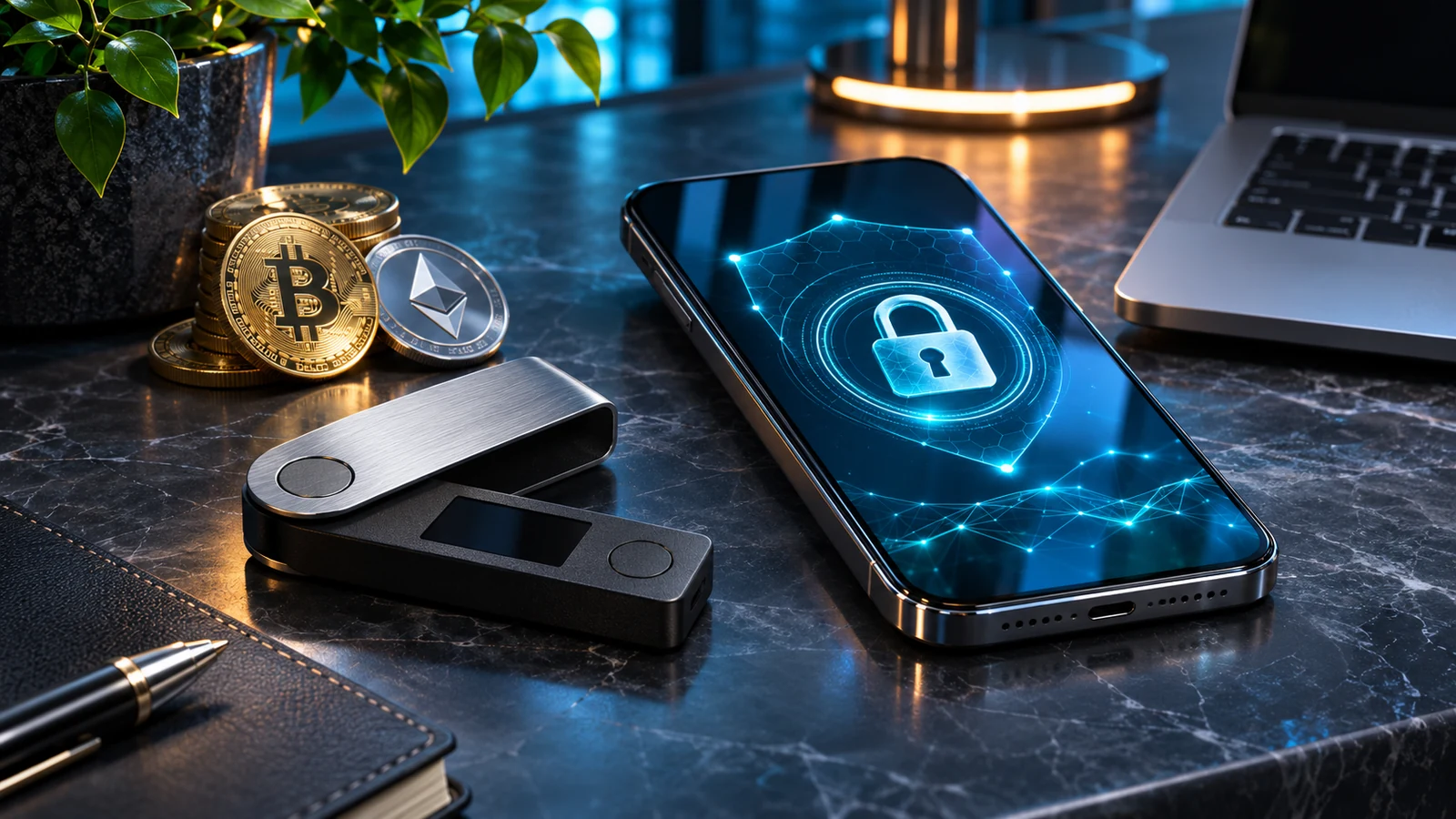
Buying crypto is only the first security decision. The next is where the assets will live. There is no single storage method that is best for every user, because convenience, control and recovery risk pull in different directions.
Option 1: Leave assets with the platform
Keeping assets in an exchange or broker account is convenient for trading and can simplify password recovery. The trade-off is that you depend on the platform’s security, operational controls and withdrawal availability.
If you keep funds on a platform, use a unique password, strong two-factor authentication and every available withdrawal-security feature.
Option 2: Use a software wallet
A software wallet gives you direct control of the wallet keys while keeping access relatively convenient on a phone or computer. This is useful for regular on-chain activity, but the security of the device becomes part of the security model.
Option 3: Use a hardware wallet
A hardware wallet is designed to keep private-key operations isolated from an internet-connected computer or phone. It can be a good fit for long-term holdings, provided you understand the backup and recovery process.
The recovery phrase matters more than the device
For many self-custody wallets, the recovery phrase can restore access to the funds. Anyone who obtains it may be able to move the assets. Losing it can also make recovery impossible if the wallet device fails.
- Do not store a recovery phrase in email, cloud notes or ordinary screenshots.
- Do not enter it into a website because a support message asks you to.
- Keep backups protected from theft, fire and accidental disposal.
- Make sure trusted heirs or family members can follow a recovery plan if appropriate.
Use a small test transaction
When moving to a new wallet or network, send a small amount first. Verify the destination address, network and arrival before sending the remaining balance. This adds a little friction but can prevent expensive mistakes.
Watch for approval and phishing risks
Self-custody protects you from some platform risks but introduces new ones. Malicious websites can ask a wallet to sign transactions or grant token approvals. Treat wallet prompts as financial instructions, not routine pop-ups.